
Applied AI
AI in payments, credit and fraud under the EU AI Act
AI in payments and credit covers the models that score creditworthiness, price risk, detect fraud, monitor transactions and automate customer service in financial firms. Under the EU AI Act, creditworthiness assessment of natural persons and life and health insurance pricing are high-risk uses, with obligations on both the provider of the model and the firm that deploys it; fraud detection is expressly carved out of that tier but still sits under financial regulation and model risk expectations. Hexploits builds these systems with the documentation, logging, human oversight and testing the Act and the FCA expect, from the first release.
A named engineer replies within one working day. A written scope and an indicative price within two.
Who this is for
- Lenders and BNPL providers using models in credit decisions for individuals.
- Payment firms and acquirers running fraud, chargeback and transaction-monitoring models.
- Insurers pricing life or health cover with models.
- Model risk and compliance functions asked to approve AI they did not build.
What you get
Deliverables, not slogans. Each one appears in the statement of work.
- Risk classification of every AI use in the payment, credit and servicing flows, with the reasoning written down.
- For high-risk uses: risk management records, technical documentation, automatic logging, human-oversight procedures and a post-market monitoring plan.
- Fundamental Rights Impact Assessment support for credit-scoring and insurance-pricing deployers where Article 27 requires it.
- Bias and performance testing against your own portfolio data, refreshed on a schedule, with results on file.
- Explanations for adverse decisions that a customer and a complaints handler can both use.
- Fraud and transaction-monitoring models with the false-positive rate, review queue and audit trail measured and reported.
Our engineers work across the major languages, frameworks and cloud platforms. We build on the stack you already run, with technology choices explained in writing before work begins.
How it is delivered
The same four stages as every Hexploits engagement, applied to this capability.
Stage 1
Inventory and classify
Two to four weeks. Every model in the flow is listed, its use mapped to the Act’s categories, and provider or deployer status determined. Output: a dated plan to each deadline and a fixed figure or capped estimate.
Stage 2
Build the controls
Logging, oversight, testing and documentation are built into the model pipeline and the release process, so evidence is produced by the system rather than assembled before an audit.
Stage 3
Launch
Shadow-mode running against the existing decision process, bias and performance results reviewed with model risk, then cutover by segment.
Stage 4
Monitor
Drift, bias and performance monitoring, incident handling and periodic review under deployment and monitoring, with the inventory kept current.
Built by the same team
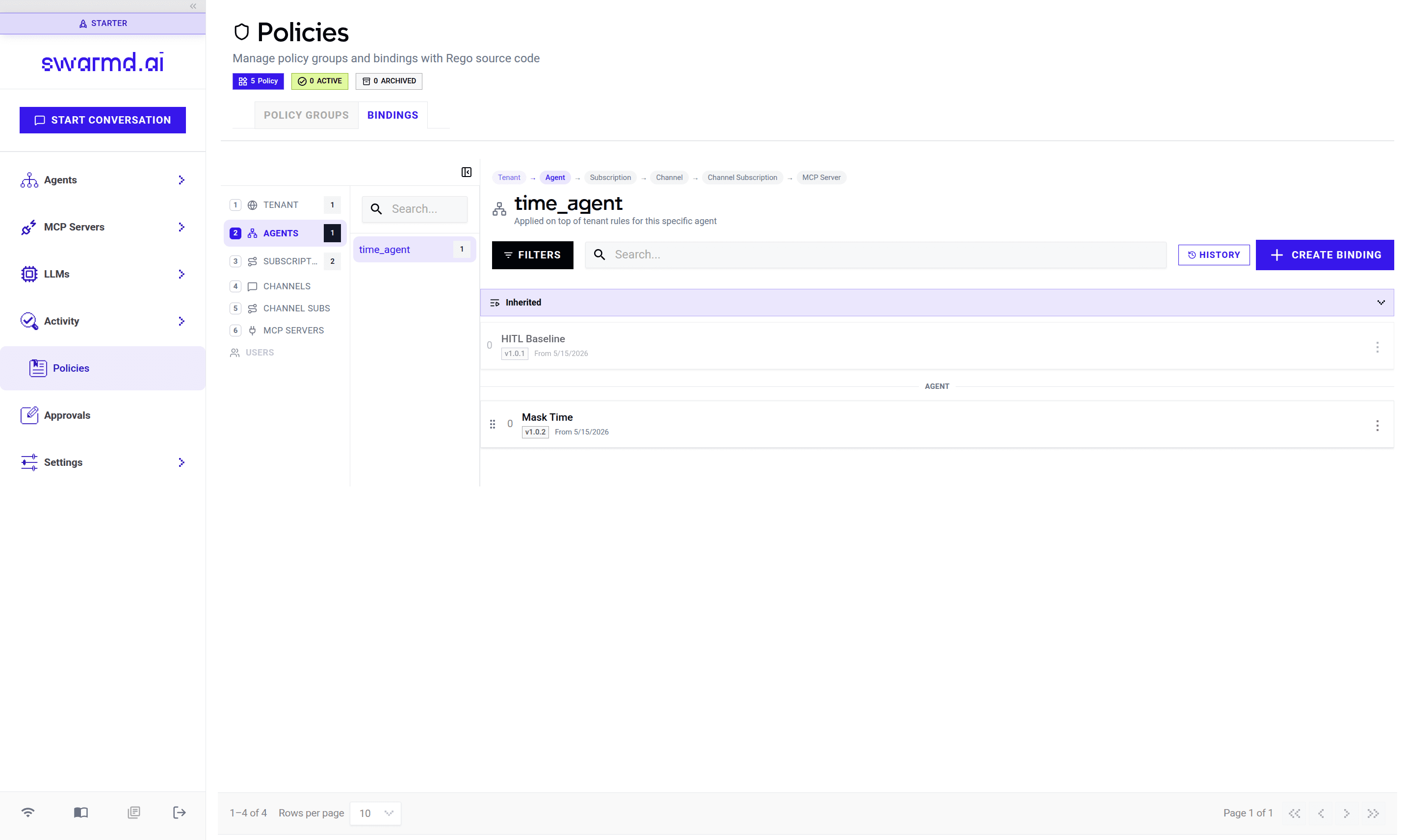
We are the core engineering team behind swarmd.ai
swarmd.ai is an EU AI Act readiness platform for governing AI agents in highly regulated industries: policy enforced on every action, tamper-evident audit trails, per-tenant isolation and customer-owned identity. The same patterns are what we apply to a lender’s or a payment firm’s own models.
How success is measured
Every engagement agrees its measures and the measurement period in writing before work starts.
- Every model classified, with documentation complete before its applicable deadline.
- Bias and performance test results on file and refreshed on schedule.
- Fraud model precision and recall, and the review queue size, reported monthly.
- Adverse decisions with an explanation available, as a share of all adverse decisions.
Proof
Case studies with numbers, and reviews linked to Google where they were left there.
swarmd.ai · Software vendor · 6 months
Enterprise AI control plane delivered in six months at 75% under budget for a UK software vendor
JobVantage · Recruitment technology · Duration TBC
99.9% availability and sub-100ms responses for a recruitment intelligence platform, at negligible infrastructure cost
Director, IO Solutions
“Fantastic to work with. High level of attention to detail and flawless communication throughout. Would recommend to anyone looking to develop or improve a software product.”

Director, JobVantage
“Working with Hexploits has genuinely been a pleasure, and I see them as my scaling partner for the foreseeable future as JobVantage grows. If you’re looking for a development team who combine strong AI/engineering capability with honesty, flexibility and a real interest in your business, I’d strongly recommend them.”

Questions we get asked
Is credit scoring high-risk under the EU AI Act?
Is fraud detection high-risk?
When do the obligations apply?
Does this replace our model risk framework?
Is this legal advice?
Related
Sectors where this is most often needed
More in applied ai
Internal AI assistants and copilots for UK businesses
EU AI Act readiness for UK businesses
AI document and email processing
AI decision support and forecasting
Agentic AI workflows with governance
AI sovereignty: private and EU-hosted AI
AI governance and ISO 42001
AI for recruitment: sourcing, screening and matching automation
EU AI Act for recruitment and HR: high-risk hiring AI explained
AI governance readiness for recruitment and HR businesses
Next step
Request a proposal.
Tell us about the system and the sector. A named engineer replies within one working day. A written scope and an indicative price within two working days of a short scoping call.